
TREND SPOTLIGHT #02
Agile Event management: The Art of Mastering Events with Flexibility AND Strategy
Strict planning is a thing of the past – today, adaptability is the key to success.
Events have evolved. Attendees now expect not just a seamless experience but also innovation, sustainability, and flexibility. Traditional project management methods often reach their limits in this dynamic environment. The solution? Agile event management.
But what does that actually mean? How can it help make events more efficient, sustainable, and technologically advanced? And most importantly – how can you apply it directly to your events?
WHAT IS AGILE EVENT MANAGEMENT?
Agile event management is based on principles from software development that have proven effective in dynamic environments. It emphasizes continuous adaptation, close teamwork, and iterative processes rather than rigid, long-term planning.
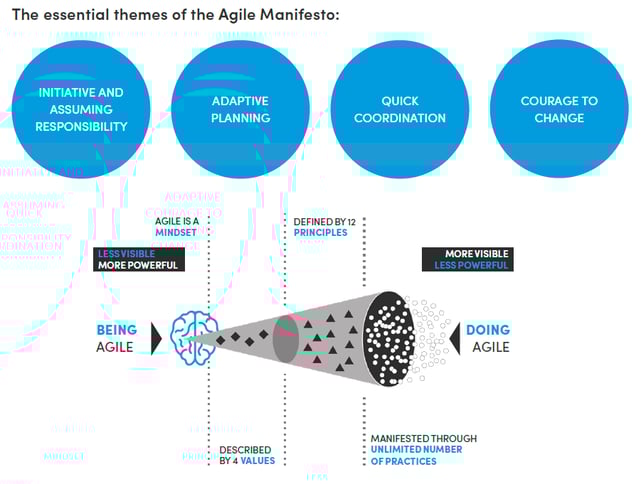
The agile Mindset: The foundation for successful events
Agility starts in the mind. The agile mindset is the belief that skills can be continuously developed through learning and adaptation. In contrast, a fixed mindset assumes that abilities are innate or stop evolving at a certain point. Those who think agile see challenges not as threats but as opportunities for growth.
This mindset is essential for successful agile event management. Every event presents a chance to learn, analyze mistakes, and refine processes. By taking an iterative approach – where feedback is immediately integrated into ongoing planning – each event improves step by step.
The three core principles of agile event management:
1 Flexibility over rigid planning: Changes are not just accepted but embraced as part of the process.
2 Iterative approach: Regular feedback loops help identify issues early and continuously optimize the event.
3 Self-organized teams: Responsibility is distributed, and decisions are made quickly.
These principles empower teams to respond confidently to last-minute changes and unforeseen challenges.
Agile Teamwork: Retrospectives and Self-Organization
A key element of agile work is the retrospective. In these sessions, the team regularly reflects on what is working well and where improvements are needed. While traditional project management often conducts a "lessons learned" meeting only after the event – usually with little impact on future projects – ongoing reflection allows for immediate improvements to be implemented.
Equally important is self-organization within the team. Instead of relying on rigid hierarchies, the team takes responsibility for prioritizing tasks independently. A leader provides direction but acts more as a facilitator rather than a traditional manager. This approach increases motivation and ensures that responsibility for success is shared across the entire team rather than resting on individuals alone.
AGILE-1.png?width=1390&height=900&name=news.vokdams.dehubfsArchiv%20(%C3%A4lter%20als%2015.10.2021)AGILE-1.png)
Why agile event management is more important than ever
The past few years have made one thing clear: the event industry must constantly adapt. Sudden crises, changing attendee expectations, and new technological advancements require quick and flexible responses. Traditional, months-long planning with a rigid event schedule no longer fits this reality.
This is where agile event management comes in – it turns uncertainty into opportunity. Instead of sticking to a fixed plan, it embraces a continuous optimization process in close collaboration with teams, partners, and attendees.
BENEFITS OF AGILE EVENT MANAGEMENT:
-
Greater adaptability: Respond quickly to new requirements.
-
More creativity and innovation: Teams work autonomously and make flexible decisions.
-
Better resource utilization: Less waste through iterative planning.
-
Higher attendee satisfaction: Close collaboration with stakeholders leads to better results.
Real-World Example: Agility in Action
Imagine you're organizing a large conference. Just days before the event, the keynote speaker cancels. In a traditional planning approach, this would be a disaster—panic, long decision-making processes, and costly last-minute fixes.
With agile event management, the situation unfolds differently. Regular check-ins and a flexible team mean there's already a Plan B in place. Another speaker steps in, the schedule is adjusted on short notice, and attendees barely notice the change. The event remains a success.
Agile Event management MEETS SUSTAINABILITY & AI
Sustainability and artificial intelligence (AI) are two of the biggest trends in event management today. But how can these innovations be seamlessly integrated with agility?
sustainability trough agile processes
-
Iterative planning allows for early testing and direct implementation of eco-friendly alternatives.
-
Data-driven feedback helps optimize sustainable measures efficiently (e.g., reducing waste, improving transport logistics).
-
Flexibility in execution enables quick adaptation to more environmentally friendly solutions.
Artificial intelligence as a catalyst for agile events
-
AI-driven analytics enhance event planning by predicting attendee flows and interests.
-
Automation reduces manual tasks, giving teams more time for creativity and strategy.
-
Personalized experiences: AI can tailor content, networking opportunities, and sessions to individual preferences.
By combining agility with sustainability and AI, events become not only more efficient but also future-proof.
Agility Is Not an Option – It’s the Key to Successful Event Management
The ever-evolving event industry faces constant challenges – but also incredible opportunities. Agile event management provides a clear competitive advantage by enabling faster, more creative, and highly adaptable event planning.
Are you ready to take your event management to the next level? Start now – we’re here to support you with agile methods for planning and executing your next event.
Would you like to dive deeper into the topic of "Agile Event Management"?
Then download our whitepaper VOK DAMS AGILE EVENT MANAGEMENT for free.
If you want to learn more about the event trends for 2025 or are interested in collaborating, feel free to get in touch with us at info@vokdams.de.


